
Why Hamlet Calls a Play “Caviary to the General”
In Hamlet, caviar describes a play its audience failed to appreciate. A small culinary metaphor opens a larger question about who gets to judge good taste.

Caviar makes a brief appearance in Hamlet, but nobody opens a tin. The prince is talking to an actor about a play he remembers admiring. It had failed to please a wider audience. His explanation is a food metaphor: “’twas caviary to the general.”
Five words bring the caviar table into the theatre. They also leave a question hanging: when people dislike something you admire, is the problem their taste, or your certainty about it?
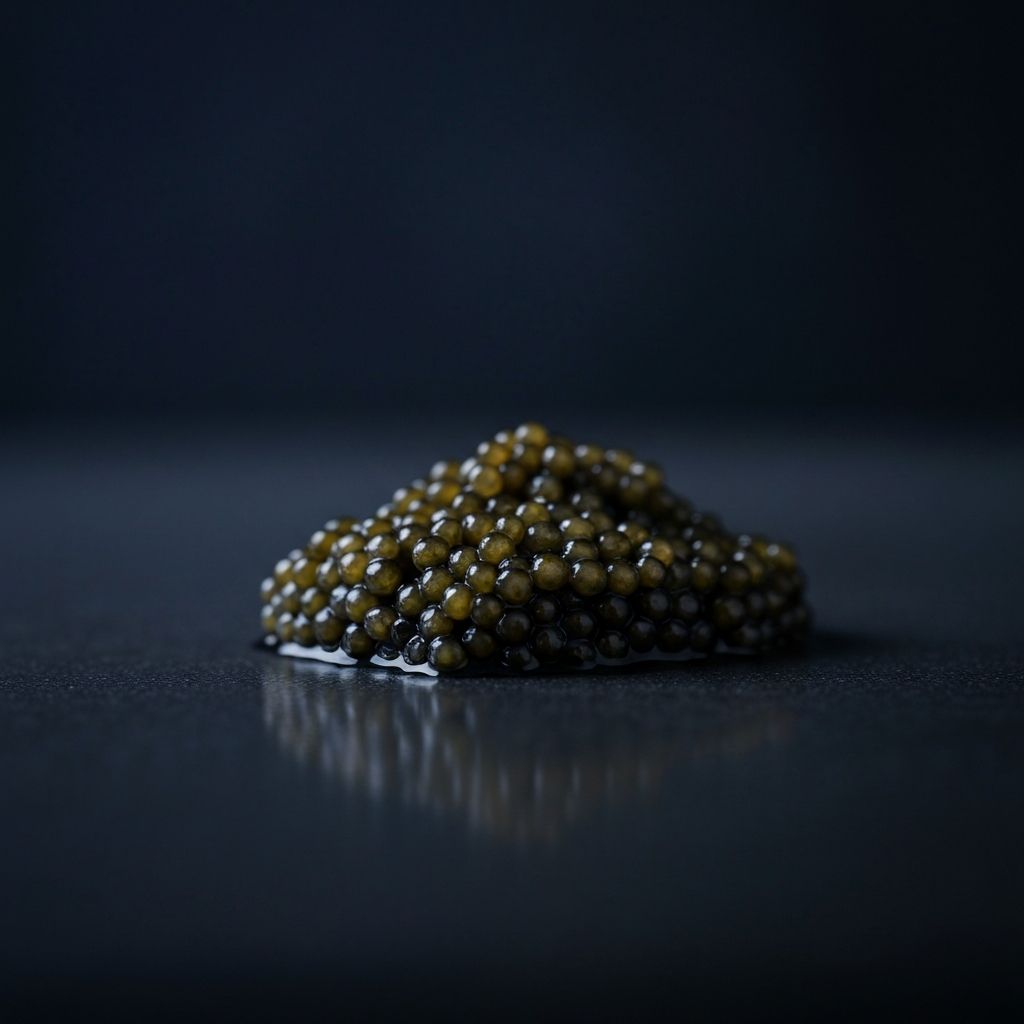
Cover image: an AI-generated editorial illustration of caviar and a play script. It does not depict a documented meal or historical artifact.
A delicacy in a discussion of drama
The line appears in Act 2, scene 2, after the players arrive at Elsinore. Hamlet asks for a speech he has heard before and praises the play it came from. The Folger Shakespeare Library’s text preserves the spelling caviary. In this context, the general means the wider public. Hamlet contrasts that audience with himself and other judges whose opinions he respects. Read the scene in the Folger edition.
The metaphor makes appreciation feel like a palate: the same offering can delight one person and leave another unmoved. Collins still records caviar to the general as an expression for something that appeals to a particularly cultivated taste, with a reference to this scene. See the dictionary entry.
That definition captures the compliment to the work. It also leaves room to hear the self-compliment in the speaker. Hamlet places himself among those who recognise what the crowd misses. Read aloud, the phrase can sound admiring, impatient or rather pleased with its own discernment. Those are possibilities in the language, not a verdict on how every performance must deliver it.
The food language keeps going
Caviar is one part of a longer culinary thread. Hamlet first asks the players for a “taste” of their ability. He goes on to describe the admired play as “well digested” in its scenes, then recalls praise for writing without added “sallets” to make it “savory.” These words put the making and judging of drama beside the preparing and tasting of food. The surrounding passage.
It is an appealing way to speak about craft. A dish has ingredients, arrangement and proportion; a play has language, scenes and pacing. The comparison gives an abstract judgment something the listener can almost feel. You need not agree with Hamlet’s opinion to understand the experience of finding something excellent that your companions do not enjoy.
The scene then lets that disagreement happen in front of us. During the requested speech, Polonius complains about its length, while Hamlet wants the actor to continue. The audience’s differing appetites have become visible within the performance itself.
What the line can tell us
For a history of caviar, the useful evidence is precise: Shakespeare gives a character the food’s name as a way to discuss selective appreciation. The passage shows a literary association between caviar and discriminating taste. It supplies no price, species, supplier or serving instructions. It cannot establish that Shakespeare ate caviar, or that all his contemporaries disliked it.
Keeping that boundary makes the detail more interesting. A familiar story about luxury can become a story about judgment: how readily people turn their preferences into a measure of other people. The joke still works whenever someone defends an unpopular book, film or dinner by insisting that its audience simply failed to understand it.
Caviar’s place here is small but memorable. It gives Hamlet a compact language for the distance between delight and indifference, a distance that any shared table can reveal.
You May Also Enjoy
Fabergé’s Caviar Dish: A Small Luxury Carved in Jade
A silver and nephrite caviar dish in Houston reveals a quieter side of Fabergé, where the vessel could be as intriguing as the delicacy it held.

Caviar Through History
From Persian medicine to the tables of the Tsars, from a nineteenth-century American glut to the collapse of the Caspian and the farms that followed. How a fisherman's food became the world's most guarded luxury.

The Sturgeon Behind the Caviar
A fish older than the dinosaurs, brought to the edge and then back by the industry that nearly ended it. What ethical caviar actually means today.